AELO Swiss Academy's Training Emphasis: IFR, APS MCC, and Airline Preparedness
Training for a modern airline company job is not almost passing exams. It is about being the type of prospect who can walk right into a multi crew atmosphere with the discipline to handle work, the procedures frame of mind to support a method, and the communication practices that maintain you useful in the cockpit when things obtain busy.
AELO Swiss Academy, based in Switzerland with primary procedures linked to Locarno and Gordola in Ticino, structures its deal around precisely that change from "student pilot" to "airline-ready student." The academy says it was established in Switzerland in 1985 and has trained pilots for greater than three decades. It is likewise explained openly as a certified Approved Training Organisation (ATO), understood approval code CH.ATO.0311.
What makes AELO's training focus attract attention, specifically for prospects focusing on airline timelines, is the method it places instrument flying capacity and multi staff capability near the facility of the tale, instead of treating them as abstract syllabus items. The academy's products point to both airplane training, such as Ruby DA42, and progressed simulator work, consisting of a Boeing 737 NG simulator used for advanced IFR and APS MCC best pilot school in Europe training. That mix matters, due to the fact that IFR mastery is not only about understanding, it has to do with building practices under realistic workload, and APS MCC is where the behaviors obtain evaluated in a crew context.
Why IFR training is treated like a core skill, not a checkbox
IFR is the typical language of airline procedures in climate, in directing restrictions, and in the method control removes aircraft. Yet pupils usually come close to instrument flying as something they "do" till the check ride or the exam is done. Airline training pushes you to do the opposite: you practice IFR as a system you run every min, from briefing to arrangement, from speed administration to treatment discipline.
AELO's public description specifically consists of training support that features innovative IFR within a Boeing 737 NG simulator environment. That information is important. In a simulator, the pressure factors show up fast. You learn how quickly work stacks when you are following clearances, keeping an eye on instruments, setting up appropriately, and still maintaining the cockpit calm enough permanently decisions.
Even if you are a certain student pilot, IFR training often tends to disclose your genuine toughness and weak points. Some people are solid on procedures however weak on power administration. Others can fly the needles however battle with the mental sequencing that keeps the technique stable. The most effective instrument training does not simply "show you the strategy," it gives you repeatings that make the method automated. That is particularly useful when you later relocate into multi team procedures where the workload is shared, and your jobs need to be timed to what your staff partner is doing.
From an airline company readiness viewpoint, the objective is simple: when the atmosphere adjustments, your scan and your flow stay regular. A prospect that can orient a technique, anticipate the next sector, and interact their purposes readily is simpler to place into an organized training program.
APS MCC: where technique fulfills multi team reality
APS MCC is among those phrases that can appear distant till you see what it is trying to safeguard versus. Multi staff training is not just discovering to "chat more." It is finding out to coordinate. It is constructing a predictable department of tasks. It is learning just how to manage timing gaps, missed calls, and the human propensity to assume your partner is on the very same page.
AELO's products state that its Boeing 737 NG simulator is used for innovative IFR and APS MCC training. That pairing is telling. In real airline company operations, tool flying and multi team teamwork are not separate worlds. Even when the flight is stable, tool workload is consistent. The crew has to take care of automation, engage procedures, and connect in a manner that supports safety margins.
In a class, multi team ideas can seem tidy. In a simulator, you promptly experience the messier side. You may know the short conceptually, but your implementation delays. Or you might communicate properly, yet your timing pressures your partner to adjust instead of acting. APS MCC training is where prospects learn whether they can stay useful under those problems, and whether they can recoup efficiently when something does not go as planned.
There is also a psychological side. Multi team training asks you to carry out while viewing another pilot carry out alongside you. That can be scary if you have actually been flying solo, where your interest is totally under your control. The change is not regarding being much less assertive. It has to do with being properly assertive, utilizing standard style and organized control to make sure that your companion can trust your calls.
The aircraft and simulator equilibrium that supports real progress
AELO's openly described training resources include Diamond DA42 airplane and a Boeing 737 NG simulator. That matters for how finding out sticks.
Light aircraft and organized trip training time can construct principles promptly: standard stick and tail discipline, disciplined avionics use, and procedural routine under simpler cockpit problems. Then, when you relocate into the simulator for advanced IFR and APS MCC, your job is to take those fundamentals and run them in an atmosphere that looks closer to airline company operations, with the included intricacy of multi staff operations and larger system behavior.
An usual error in pilot development is treating simulator time as "just method." A good simulator block pressures you to reduce emotionally, due to the fact that the repercussions are substitute but the treatment timing is actual. Your briefing and your lists have to indicate something. You can not count on good luck or on "feeling your way" with tool segments.
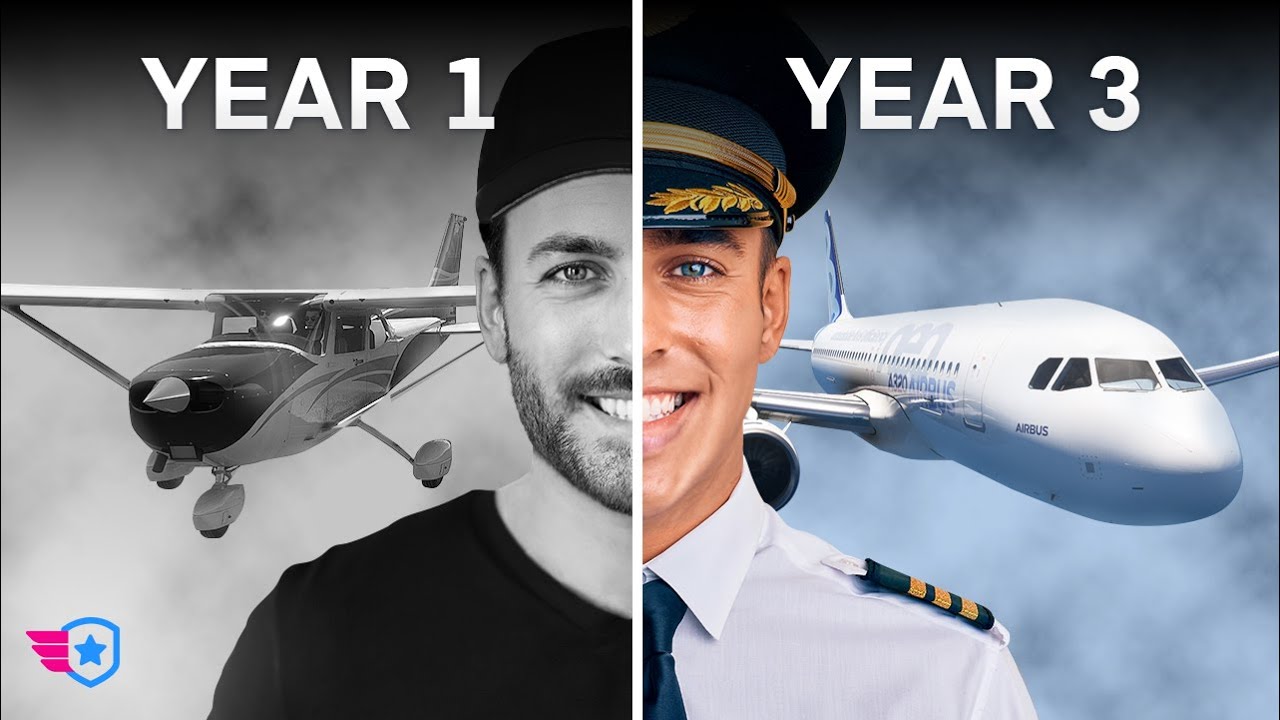
The DA42 item is likewise pertinent because it sustains very early building blocks and procedural grounding before candidates face larger simulator workload. It provides you a possibility to internalize how you handle phases of trip, just how you manage adjustments in conditions, and how you keep situational awareness.
Two pathways, one airline company mindset
AELO public materials describe 2 main training paths: an 18-month ATPL Integrated Program and a SkyAlps Airlines MPL Program that consists of a job warranty or placement pathway.
Those 2 courses mirror various entry accounts and different end goals, yet the airline company readiness expectation is still the very same: you are moving toward a function where IFR flying and multi crew skills are anticipated, not optional.
The incorporated program's timeline recommends a structured accumulation towards specialist capability. The MPL program's described airline placement pathway suggests an emphasis on training progression that lines up with airline company demands. For many candidates, the difference is less concerning eminence and more regarding clarity. If the training course is aligned with a specific airline result, you can psychologically devote earlier to the sort of routines and requirements that will matter later.
What "airline preparedness" resembles when it is practical
Airline preparedness usually gets marketed as a state of mind, self-confidence, or "perspective." In actual training, it is much more concrete. It shows up in how promptly you can transition in between stages, exactly how constantly you comply with flow and callouts, and how you take care of inconsistencies without panic.
Here is what I seek when I hear "airline preparedness" utilized seriously. It is not perfection. It is reliability.
- Procedures under anxiety: your scan does not collapse when work boosts. You still understand what the next product is, and you still manage speed, arrangement, and automation appropriately.
- Stable method actions: you orient the approach in a way that supports stablizing, and you do not improvisate critical sectors at the last minute.
- Communication that supports teamwork: telephone calls are prompt, clear, and straightened with basic assumptions. You do not discuss the staff or assume the other pilot has the exact same mental picture.
- Recovering efficiently: when something goes off strategy, you remedy without transforming the cabin into a debate.
- Consistency throughout phases: you do not act like a different pilot in the simulator than you do in the training setting. The routine transfers.
That is why AELO's mix of sophisticated IFR training and APS MCC simulator job matters. It targets at the real competencies that airlines care about in training atmospheres where you have to work as component of a crew.
Instructor high quality and what it indicates for candidates
AELO's public products state its instructors consist of active airline company pilots. That is not just a credential line. Active airline company pilots tend to bring a very specific training lens: they comprehend what looks excellent to a training division, what routines create difficulty in line training, and which poor behaviors take the lengthiest to unlearn.
That type of instruction can lower time lost on the wrong things. Candidates frequently think they need "even more details," however the traffic jam is typically something else: application. It is discovering exactly how to sequence your jobs, exactly how to orient efficiently, just how to keep your head when something adjustments, and how to talk so the staff can coordinate.
If your trainers fly the job today, they can also assist you translate why specific information matter, as opposed to treating procedures like abstract rules.
Numbers that matter, and the limits of any kind of statistic
AELO says its grads land a pilot job within six months, with a self-reported figure of 96%. That is a solid claim, and it is also the sort of number that prospects must treat carefully.
A number similar to this works as a directional indicator, since it suggests the academy thinks its training and placement support can convert into end results promptly. Still, any kind of real-world employment result depends upon employing cycles, individual progression, and readiness at the time of assessment. Given that AELO defines it as self-reported, the most honest way to review it is as their reported efficiency, not as a warranty you can determine right into certainty.
What you can sensibly make use of such a fact for is motivation and assumption monitoring. If the academy's program ideology is aligned to task results, it likely constructs towards those assumptions through the CPL school for internationals training elements it highlights openly, consisting of advanced IFR and APS MCC training in a Boeing 737 NG simulator environment.
Edge situations prospects often overlook prior to they start
Even with strong training facilities, prospects in some cases arrive with gaps that develop friction. These voids are seldom remarkable. They are generally tiny habits that reduce progress.
For instance, a prospect can be technically precise but irregular with rundowns. Or they may understand multi team communication theoretically but still default to solo flying behaviors, where they look internal as opposed to working with. In simulator environments, those propensities compound quickly.
If you are making a decision whether a program is appropriate for you, focus on what it will certainly need of you psychologically, not just what it will teach.
A useful pre-training list aids right here, since it requires you to analyze your standard behavior. If you can answer these with confidence, you will likely proceed much faster as soon as educating increases:
- Can you orient a method or segment out loud in a structured way?
- Do you keep tool scan technique when workload rises?
- Do you connect objectives plainly, without waiting to be prompted?
- Can you recoup from a blunder without losing situational awareness?
- Do you research constantly, not only before evaluations?
This is not about "being best." It is about decreasing avoidable rubbing so your training time becomes skill purchase, not duplicated rework.
How the AELO training emphasis can equate right into your day-to-day mindset
The information AELO publishes, such as the Diamond DA42 fleet for training resources and a Boeing 737 NG simulator for advanced IFR and APS MCC, recommend a calculated progression: fundamentals initially, then practical multi team and instrument work. The daily way of thinking that matches this structure resembles preparation, not improvising.
When you train for IFR, you can get away with finding out patterns up until you come across a situation that compels you to take care of numerous tasks at the same time. Then you uncover whether you built a behavior of sequencing. Simulator training for APS MCC tends to punish laid-back interaction and inconsistent timing. That suggests your way of thinking ought to develop towards "circulation and security."
Flow is the order of procedures you run in your head. Stability is how you maintain the cockpit foreseeable. In an airline company training context, instructors intend to see that security because it makes training results measurable and repeatable.
The bigger picture: developing a crew participant, not just a flyer
A great deal of training programs can create a pilot that flies a plane. Airline-ready training has to create a crew member that can operate inside a system. That system consists of procedures, communication, workload sharing, and compliance with organized expectations.
AELO Swiss Academy's emphasis on innovative IFR and APS MCC using a Boeing 737 NG simulator is a clear signal that it is trying to prepare candidates for the multi staff truth of airline settings. The academy's ATO condition, its long-running existence in Switzerland given that 1985, and its defined courses, including an 18-month ATPL incorporated choice and a SkyAlps MPL path with job guarantee or placement assistance, all enhance the exact same theme: the end goal is professional operations, not just qualification milestones.
If you are taking into consideration AELO for your pilot trip, the smartest question to ask is not only "what will I find out?" It is "what sort of routines will this training require me to build?" The solution, based on AELO's openly explained training emphasis, points to regimented IFR implementation and multi team coordination under sophisticated simulator conditions. That is the kind of structure that brings beyond the training course, into the following stage where the cabin is no longer a classroom, it is a job.